 250-997-3221
National Day for Truth and Reconciliation
National Day for Truth and Reconciliation
Each year, September 30 marks the National Day for Truth and Reconciliation.
The day honours the children who never returned home and Survivors of residential schools, as well as their families and communities. Public commemoration of the tragic and painful history and ongoing impacts of residential schools is a vital component of the reconciliation process.
Both the National Day for Truth and Reconciliation and Orange Shirt Day take place on September 30.
The Meaning behind the visuals
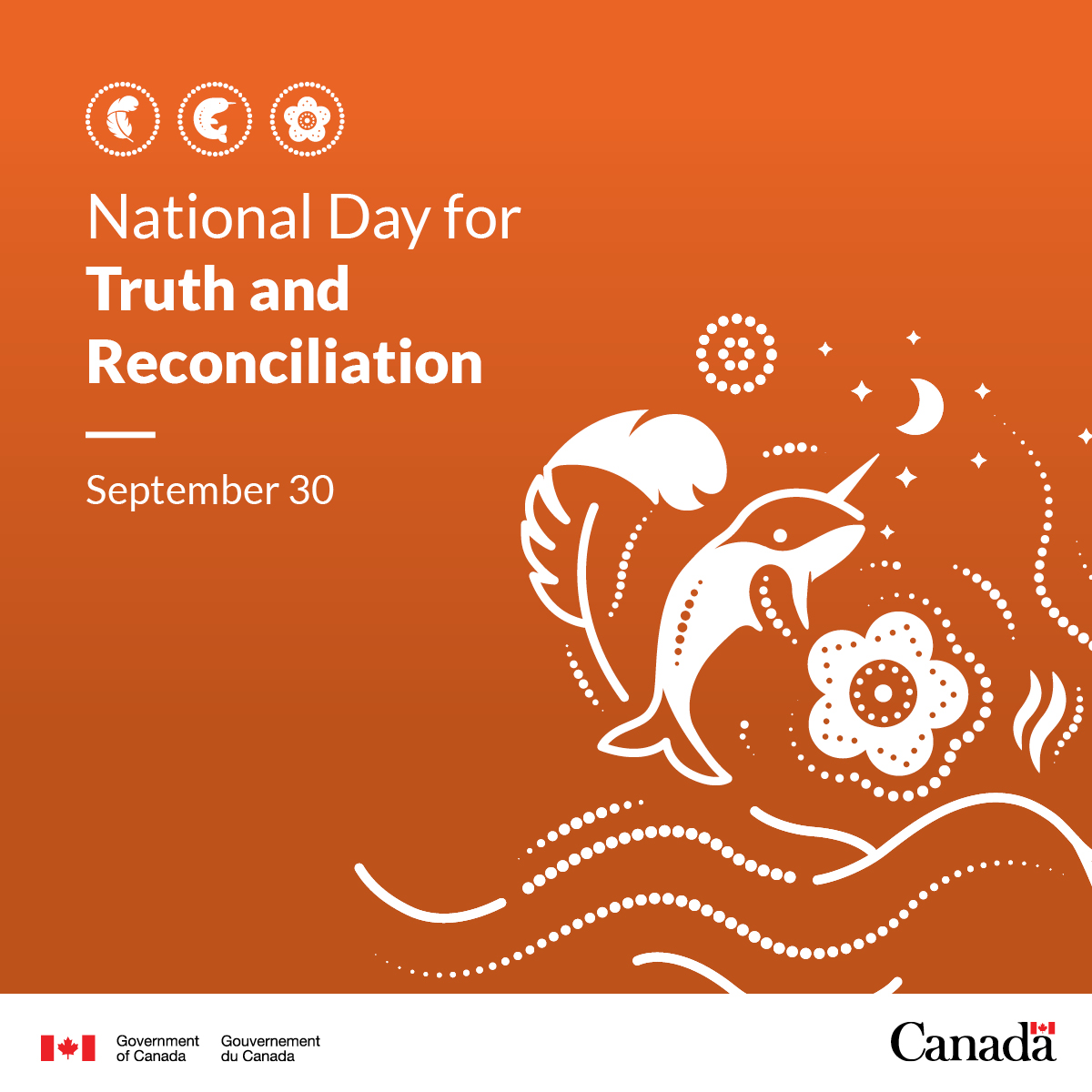
The design honours the children who never returned home from residential schools, Survivors, their families, and communities.
In the centre are three symbols: a feather, a narwhal, and a flower. Each symbol represents the distinct cultures of First Nations, Inuit and Métis communities, brought together in a circular flowing composition to reflect the connection between the groups.
Above the central elements, stars surrounding the moon honour the children who never returned home from residential schools and symbolize their enduring place in our thoughts and memory. The dotted patterns evoke beadwork and reflect the importance of passing down art, culture and traditions from one generation to the next.
Flowing lines connect the elements of the design, reflecting the connections between land, water, communities and generations. Their winding path represents the journey of reconciliation and reminds us that reconciliation is an ongoing process.
The colour orange represents remembrance and the enduring message that every child matters.
Wear Orange
Orange Shirt Day is an Indigenous-led grassroots commemorative day intended to raise awareness of the individual, family and community inter-generational impacts of residential schools, and to promote the concept of “Every Child Matters”. The orange shirt is a symbol of the stripping away of culture, freedom and self-esteem experienced by Indigenous children over generations.
Truth and Reconciliation Commission and its calls to action
There were 140 federally run residential schools in Canada that operated between 1867 and 1996. Survivors advocated for recognition and reparations and demanded accountability for the intergenerational impacts of harm caused. Their efforts culminated in:
- the Indian Residential Schools Settlement Agreement
- apologies by the government
- the establishment of the Truth and Reconciliation Commission
- the creation of the National Centre for Truth and Reconciliation
The Truth and Reconciliation Commission ran from 2008 to 2015 and provided those directly or indirectly affected by the legacy of the residential schools policy with an opportunity to share their stories and experiences. The Commission released its final report detailing 94 calls to action. The National Day for Truth and Reconciliation is a direct response to Call to Action 80, which called for a federal statutory day of commemoration.
The National Centre for Truth and Reconciliation has become the permanent archive for the statements, documents and other materials the Commission gathered. Its library and collections, as well as its National Student Memorial Register, are the foundation for ongoing learning and research.